
Andrzej Sapkowski Reveals New Novel Plans, Dismisses AI Concerns, and Shares His Philosophy on Book Pricing
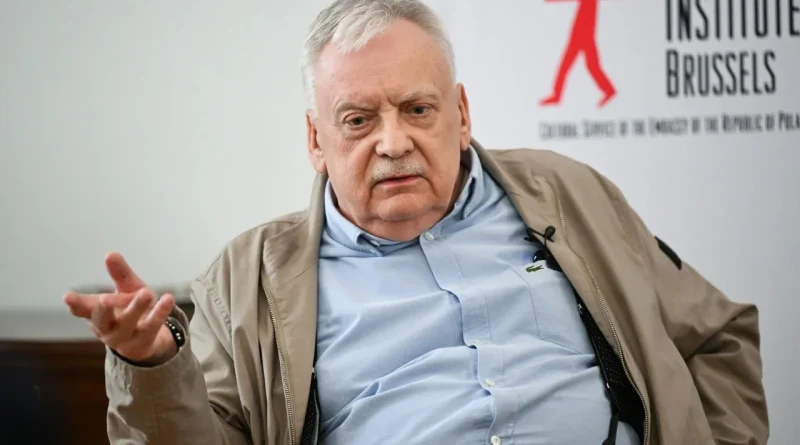
Renowned Polish fantasy author Andrzej Sapkowski, the creative genius behind The Witcher saga, made a notable appearance at the “Defier le futur” (“Challenging the Future”) book fair in Brussels. The event, organized in collaboration with the Polish Institute in Brussels, brought together literary figures from across Europe to discuss the future of storytelling in an increasingly digital age. Following his participation in the fair, Sapkowski engaged with journalists at the Polish Embassy, where he shared insights into his current projects, his views on artificial intelligence in literature, and his characteristically blunt opinions on the economics of publishing.
A New Novel in the Works
During the press conference, Sapkowski revealed that he has begun conceptualizing a new novel, though he remained characteristically tight-lipped about the specific details. The 76-year-old author, known for his sardonic wit and reluctance to discuss works in progress, confirmed that his creative energies remain very much intact. This announcement comes as welcome news to his global fanbase, many of whom have been eagerly awaiting new material since the completion of The Witcher series. Sapkowski has previously expressed that he writes at his own pace, unburdened by external pressures or market demands, a philosophy that has served him well throughout his distinguished career.
Unfazed by Artificial Intelligence
When asked about the expanding role of artificial intelligence in creative industries, Sapkowski showed a notably unconcerned demeanor. In contrast to numerous modern writers who have voiced worries about AI-produced content posing a threat to conventional storytelling, the Polish author seems assured that true human creativity cannot be duplicated by algorithms. This viewpoint is consistent with his longstanding conviction in the indispensable worth of authentic artistic expression. Sapkowski has repeatedly maintained that the essence of literature resides not simply in how words are arranged, but in the distinctive human experiences and emotions that shape every narrative decision a writer makes.
A Career Built on Authentic Storytelling
The author’s career trajectory offers important context for understanding his confidence. Sapkowski began writing The Witcher stories in the mid-1980s, originally publishing them in Polish science fiction magazines. What started as short stories about a monster hunter named Geralt of Rivia eventually evolved into a sprawling fantasy saga that has sold over 15 million copies worldwide. The franchise’s popularity exploded further with CD Projekt Red’s acclaimed video game adaptations and Netflix’s television series starring Henry Cavill. Despite this massive commercial success, Sapkowski has maintained an almost philosophical detachment from the business side of his creations, famously accepting a one-time payment from CD Projekt rather than royalties—a decision he later sought to renegotiate.
Books Should Cost Less Than Vodka
Perhaps the most memorable moment of the press interaction came when Sapkowski shared his thoughts on book pricing. With characteristic directness, he declared that a book should never cost more than half a liter of vodka. This colorful comparison, while humorous on its surface, reflects deeper concerns about accessibility in publishing. Sapkowski has long advocated for literature to remain affordable to ordinary readers, arguing that books should be everyday commodities rather than luxury items. In Poland, where the author’s career began and where his cultural impact remains strongest, this sentiment resonates particularly well with readers who remember the communist era when books were indeed priced to be accessible to working-class citizens.
Sapkowski’s Enduring Legacy
The “Defier le futur” book fair itself represents an interesting venue for Sapkowski’s appearance. The event focuses on speculative fiction and forward-thinking literary works, examining how authors envision and challenge possible futures through their writing. Sapkowski’s presence at such a gathering underscores his continued relevance in contemporary literary discourse, decades after he first introduced readers to the morally complex world of The Continent. His work has been credited with helping establish Eastern European fantasy as a distinct and influential subgenre, characterized by its darker themes, moral ambiguity, and incorporation of Slavic folklore.
As Sapkowski continues to work on his new project, the literary world watches with anticipation. His influence extends far beyond the borders of Poland, having inspired countless authors, game developers, and screenwriters worldwide. Whether his next work will return to the familiar territories of The Witcher universe or venture into entirely new creative ground remains to be seen. What is certain is that Sapkowski will approach his craft as he always has—on his own terms, with unflinching honesty, and with the conviction that true storytelling remains a fundamentally human endeavor that no technology can replace.