
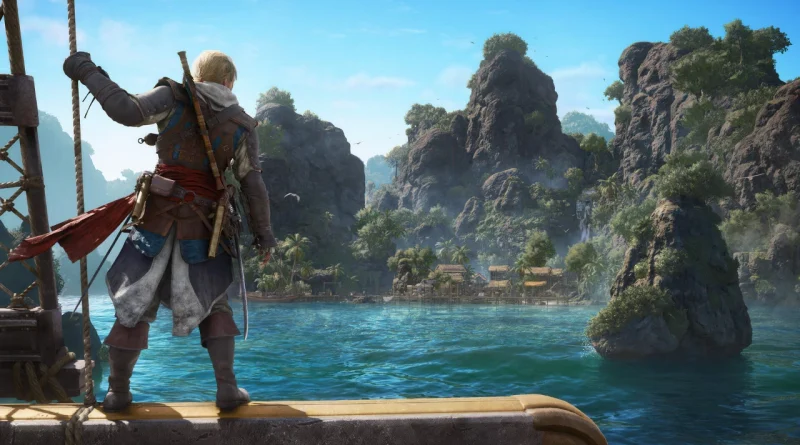
No Abstergo, No Tablets: Black Flag Remake Drops Modern-Day Storyline, And It’s the Right Call
Ubisoft has confirmed that the upcoming remake of Assassin’s Creed Black Flag, titled “Assassin’s Creed Black Flag Resynced,” will completely remove the modern-day storyline that was present in the original 2013 release. This decision marks a significant departure from the franchise’s traditional narrative structure, which has always intertwined historical adventures with contemporary framing devices. For many fans who fell in love with the swashbuckling tale of Edward Kenway, this news comes as a welcome surprise rather than a disappointment.
The Problem With the Original’s Modern-Day Segments
The original Black Flag included segments where players would exit the Animus — the technology enabling users to experience their ancestors’ memories — and wander through the offices of Abstergo Entertainment, the video game company serving as a cover for the secretive Templar organization. These portions had players navigating a contemporary office complex, infiltrating computer systems, and discovering corporate plots. Although these sections offered background for the broader Assassin’s Creed lore, they faced widespread criticism for disrupting the immersive pirate adventure that made the game so popular.
The decision to remove these modern segments reflects a broader evolution in how the Assassin’s Creed franchise approaches its dual-timeline storytelling. Since the conclusion of Desmond Miles’ story arc in Assassin’s Creed III, the modern-day portions have struggled to find their footing. Recent entries like Valhalla and Mirage have significantly reduced the emphasis on contemporary storylines, suggesting that Ubisoft has been listening to player feedback for years. The removal in Black Flag Resynced appears to be the logical culmination of this trend, prioritizing what made the original game special: the high-seas adventure.
Why Black Flag’s Pirate Experience Still Stands Out
Black Flag stands as one of the most highly praised installments in the Assassin’s Creed series, frequently regarded as the greatest pirate game ever created. Taking place during the Golden Age of Piracy in the early 18th century Caribbean, the game centers on Edward Kenway, a Welsh privateer who becomes a pirate and inadvertently gets drawn into the age-old struggle between Assassins and Templars. The game’s ship-to-ship combat mechanics were groundbreaking at the time, enabling players to command their own vessel, the Jackdaw, and engage in exhilarating maritime clashes with Spanish galleons and British warships. The open-world structure allowed players to visit dozens of Caribbean islands, search for buried riches, and encounter historical personalities such as Blackbeard, Charles Vane, and Anne Bonny.
A Smart Business Decision for Ubisoft
Industry analysts have noted that this approach makes considerable business sense for Ubisoft. The modern-day segments required significant development resources — voice acting, motion capture, level design — for content that many players actively avoided or rushed through. By focusing entirely on the historical setting, the development team can dedicate more resources to enhancing the core pirate experience with improved graphics, expanded naval mechanics, and potentially new content that expands Edward’s Caribbean adventures. This streamlined approach also makes the game more accessible to newcomers who might be intimidated by the franchise’s complex modern-day lore.
The remake comes at an interesting time for Ubisoft, which has faced challenges in recent years including delayed projects and shifting market conditions. Black Flag Resynced represents a relatively safe bet for the company — reimagining a beloved classic with modern technology while addressing one of its few criticized elements. The original game sold over 15 million copies and is frequently mentioned when fans discuss their favorite entries in the long-running franchise. By delivering a more focused experience, Ubisoft may be positioning the remake as both a nostalgia-driven product for returning players and an ideal entry point for those new to the series.
What This Means for the Future of Assassin’s Creed
For dedicated Assassin’s Creed enthusiasts, eliminating the modern-day narrative prompts questions about where the franchise is heading. Will future installments keep downplaying contemporary components, or is this strategy unique to remakes? Regardless, Black Flag Resynced seems set to provide precisely what players desired from the original: an unbroken voyage across the Caribbean as one of gaming’s most captivating pirates, without corporate intrigue and tablet-hacking diversions. Sometimes, the wisest choice a remake can make is recognizing what to leave out.