
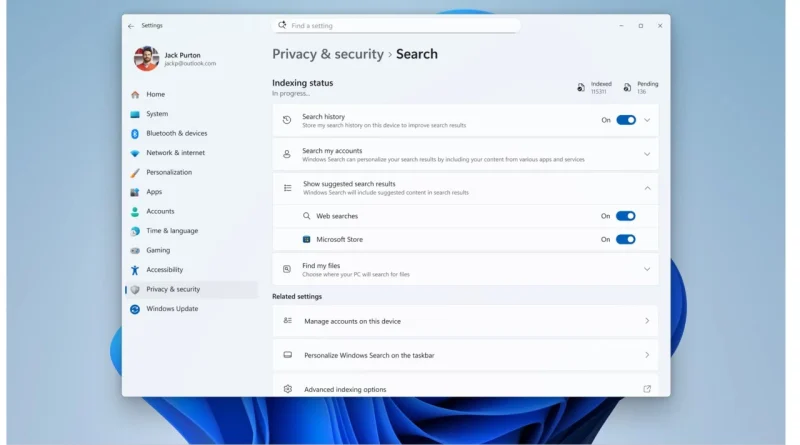
Windows Search Gets Smarter Upgrade and Removes Annoying Advertisements
Microsoft has begun testing a comprehensive overhaul of the Windows 11 search functionality for participants in the Windows Insider program. The technology giant has completely redesigned both the interface and underlying algorithms, promising to deliver faster, clearer, and more useful search results. This update marks one of the most significant changes to Windows Search in recent years, addressing long-standing complaints from users about sluggish performance and intrusive advertising within the search experience. However, the new features are being rolled out gradually, meaning not all beta testers have access to them yet.
What’s Changing in Windows Search
The revamped search experience focuses on several key improvements that users have been requesting for years. Microsoft has streamlined the visual interface, removing clutter and presenting search results in a more organized manner. The algorithm improvements mean that local file searches now return results almost instantaneously, a significant upgrade from the sometimes frustrating delays users experienced with previous versions. Perhaps most notably, Microsoft appears to be reducing or eliminating the promotional content and web suggestions that often cluttered search results when users were simply trying to find files on their own computers.
The company has also enhanced the relevance of search results, with the new system better understanding user intent and prioritizing locally stored files, applications, and settings over web results when appropriate. This contextual awareness represents a shift in Microsoft’s approach, acknowledging that users searching from the Start menu or taskbar are often looking for something specific on their device rather than browsing the web.
Historical Context and User Frustrations
Windows Search has had a troubled history since its integration with web results and Bing advertising in Windows 10. Many users complained that searching for a simple application or file would return web results, news articles, and advertisements before showing the locally installed program they were looking for. This approach, while potentially lucrative for Microsoft’s advertising business, created friction in what should be a basic operating system function. Power users often resorted to third-party search utilities or registry modifications to disable web integration entirely.
The search functionality in Windows has evolved considerably since its early days. Windows XP featured a basic search companion, while Windows Vista introduced desktop search indexing. Windows 7 refined the experience, but it was Windows 10 that controversially merged local and web search with Cortana integration. The subsequent separation of Cortana from Windows Search in later updates suggested Microsoft was already reconsidering its approach, and this latest update appears to be a continuation of that course correction.
Insider Program and Rollout Timeline
The Windows Insider program serves as Microsoft’s primary testing ground for new features before they reach the general public. With over 10 million participants worldwide, the program provides valuable feedback and helps identify bugs before widespread deployment. The gradual rollout approach Microsoft is using for this search update allows the company to monitor performance metrics and user feedback in controlled stages, reducing the risk of widespread issues if problems are discovered.
While Microsoft has not announced a specific timeline for when these search improvements will reach all Windows 11 users, features tested in the Insider program typically take several months to reach the stable release channel. Users eager to try the new search experience can join the Windows Insider program, though this comes with the trade-off of potentially encountering other experimental features and occasional system instability. For most users, waiting for the stable release remains the recommended approach.
Expert Opinion: This search overhaul signals Microsoft’s recognition that user experience must take priority over advertising revenue in core operating system functions. As competition from Apple’s Spotlight and third-party tools like Everything and Listary intensifies, Microsoft cannot afford to let Windows Search remain a frustration point. We can expect these improvements to become standard across all Windows 11 installations by early 2026, potentially setting a new baseline for how operating systems handle local search functionality.