
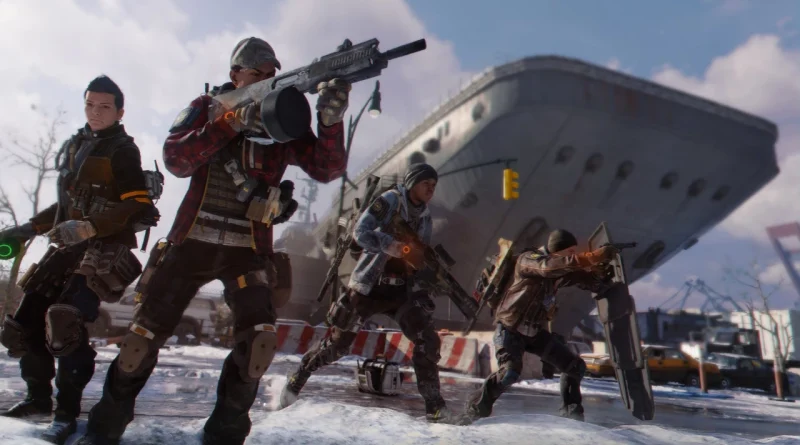
The Division 3 Enters Active Development Phase as Massive Entertainment Launches Major Hiring Campaign
Swedish game development studio Massive Entertainment has officially shifted The Division 3 into active production, signaling a significant milestone for one of Ubisoft’s most successful live-service franchises. The studio has posted dozens of new job openings specifically tied to the upcoming looter-shooter sequel, including high-profile positions such as lead game designer, animation director, and artificial intelligence specialist. This hiring surge indicates that the project is moving beyond early conceptual stages into full-scale development, with the team preparing to build upon the foundation established by its predecessors.
Snowdrop Engine Powers the Next Chapter
The job postings indicate that work will proceed on the proprietary Snowdrop engine, which has powered both earlier Division games as well as Massive’s recently launched title, Star Wars Outlaws. First introduced in 2013, the Snowdrop engine has emerged as one of the most technically remarkable tools in the gaming industry, celebrated for its capacity to render intricate urban landscapes with dynamic weather systems, realistic lighting, and sophisticated destruction physics. The engine’s versatility has enabled Massive to craft the remarkably authentic portrayals of post-crisis New York City and Washington D.C. that became defining features of the franchise.
A Franchise Built on Commercial Success
The Division franchise debuted in 2016 and rapidly became a commercial sensation, moving over 10 million copies in its initial two weeks and cementing itself as one of the fastest-selling new intellectual properties in gaming history. Taking place in a near-future America ravaged by a smallpox pandemic distributed through contaminated banknotes on Black Friday, the series follows agents of the Strategic Homeland Division, a classified government unit mobilized during catastrophic emergencies. The original game’s evocative portrayal of a fallen Manhattan, featuring its deserted streets, improvised quarantine zones, and desperate survivors, struck a chord with players looking for immersive open-world experiences.
The sequel, The Division 2, launched in 2019 and shifted the action to a summer-ravaged Washington D.C., expanding gameplay systems while maintaining the franchise’s core identity as a cover-based tactical shooter with extensive RPG elements. Despite launching to strong reviews, the game faced the typical challenges of live-service titles, requiring constant content updates to maintain player engagement. Ubisoft has continued supporting the game with new content and seasonal updates, demonstrating the publisher’s long-term commitment to the franchise and its dedicated community of millions of active players worldwide.
Advanced AI Systems on the Horizon
The emphasis on hiring AI specialists suggests that The Division 3 may feature significantly enhanced enemy behavior and companion systems compared to its predecessors. Modern gaming increasingly relies on sophisticated artificial intelligence to create believable, challenging opponents that can adapt to player strategies. Industry analysts speculate that the new installment could incorporate more advanced NPC behavior patterns, potentially including civilian populations that react dynamically to the player’s actions and the evolving state of the game world. Such improvements would align with broader industry trends toward more immersive and responsive open-world experiences.
Massive Entertainment’s Growing Portfolio
Massive Entertainment currently operates as a key strategic studio within the Ubisoft portfolio, having grown substantially since its acquisition by the French publisher in 2008. Beyond The Division series, the studio has expanded into other major franchises, including the recently launched Star Wars Outlaws, which represents the first open-world Star Wars game. The studio is also developing a narrative-driven Avatar game based on James Cameron’s film franchise. This diverse portfolio demonstrates Massive’s evolution from a single-franchise developer into a multi-project powerhouse capable of handling some of gaming’s most prestigious licenses.
While no official release window has been announced for The Division 3, the nature of the positions being filled suggests that players should not expect the game for several years. Major AAA titles typically require three to five years of development, and the fact that Massive is still recruiting for leadership positions indicates the project remains in relatively early stages. However, the active hiring campaign provides encouraging confirmation that the franchise’s future is secure, and fans can anticipate another ambitious entry in the series that will likely push the boundaries of what the Snowdrop engine can achieve on current-generation hardware.