
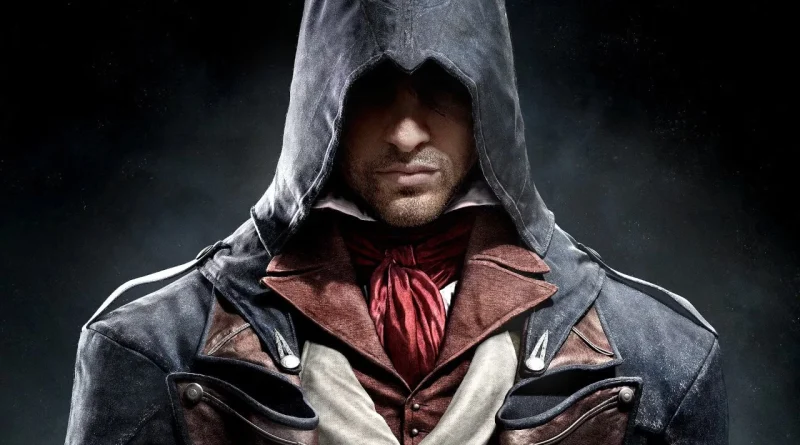
Lead Assassin’s Creed Unity Developer Calls It the Most Underrated Game in the Series
Jean Guesdon, one of the lead developers behind Assassin’s Creed Unity, has recently shared his reflections on the game’s legacy, declaring it one of the most underrated entries in Ubisoft’s acclaimed franchise. The 2014 release, set against the backdrop of the French Revolution, has long been a subject of debate among fans and critics alike, with its troubled launch casting a shadow over what many now consider to be an ambitious and groundbreaking title in the series’ history.
Guesdon’s comments come nearly a decade after Unity’s initial release, a period during which the game has undergone a significant reappraisal within the gaming community. While the title was initially plagued by severe technical issues, including frame rate problems, game-breaking bugs, and the now-infamous faceless character glitches that went viral on social media, many players who have revisited the game in recent years have discovered a remarkably detailed and innovative experience hidden beneath those early problems.
A Troubled Launch That Defined Perception
When Assassin’s Creed Unity launched on November 11, 2014, it represented Ubisoft’s first attempt at creating a truly next-generation Assassin’s Creed experience exclusively for PlayStation 4, Xbox One, and PC. The game was extraordinarily ambitious in scope, featuring a meticulously recreated 18th-century Paris with unprecedented crowd sizes of up to 5,000 NPCs on screen simultaneously. However, this ambition came at a significant cost. The game shipped in an unfinished state, leading to widespread criticism and a public apology from Ubisoft, who offered free DLC and a free game to affected players as compensation.
The launch disaster had lasting consequences for the franchise. Ubisoft implemented sweeping changes to their development process, extending production timelines and increasing quality assurance testing for subsequent releases. The following year’s Assassin’s Creed Syndicate showed marked improvement in stability, and the series eventually took a year-long hiatus before releasing Assassin’s Creed Origins in 2017, which represented a fundamental reimagining of the franchise’s gameplay mechanics.
Revolutionary Features That Were Ahead of Their Time
Despite its problematic debut, Assassin’s Creed Unity introduced several innovations that were genuinely revolutionary for the series. The game featured a completely overhauled parkour system with dedicated buttons for ascending and descending, giving players unprecedented control over their movement through the environment. The combat system was redesigned to be more challenging and tactical, moving away from the counter-heavy approach of previous entries. Additionally, Unity introduced cooperative multiplayer to the main campaign, allowing up to four players to tackle missions together in the beautifully rendered streets of Paris.
The recreation of Revolutionary Paris itself remains one of the most impressive achievements in open-world game design. The development team worked with historians to accurately model iconic landmarks including Notre-Dame Cathedral, the Bastille, and the Palace of Versailles. When Notre-Dame tragically caught fire in 2019, Ubisoft offered Unity for free and the game’s detailed 3D model of the cathedral was even discussed as a potential reference for restoration efforts, highlighting the extraordinary attention to detail that went into the game’s creation.
A Legacy Reconsidered
In the years since its release, Assassin’s Creed Unity has developed a passionate following among fans who appreciate its unique qualities. The game’s emphasis on stealth, its challenging combat, and its commitment to a more grounded, realistic tone stand in contrast to the RPG-heavy direction the series has taken since Origins. Many players argue that Unity represents the pinnacle of the “classic” Assassin’s Creed formula, offering the most refined version of the gameplay mechanics that defined the franchise’s early years.
Guesdon’s assessment that Unity remains underrated reflects a growing sentiment within the gaming community. Online discussions frequently feature players discovering or rediscovering the game and expressing surprise at its quality once the technical issues were patched. The game’s atmospheric depiction of one of history’s most tumultuous periods, combined with its mechanical innovations, has earned it a respected place in retrospective analyses of the franchise. As the Assassin’s Creed series continues to evolve and experiment with new directions, Unity serves as a reminder of both the risks of rushing ambitious projects to market and the enduring value of innovative game design.
Expert Opinion: The rehabilitation of Assassin’s Creed Unity’s reputation demonstrates how first impressions in the gaming industry can be misleading and how post-launch support can transform a product’s legacy. This case study should inform both developers and consumers that technical issues at launch, while damaging, need not define a game’s ultimate place in gaming history. Moving forward, we may see Unity’s design philosophy influence future entries as Ubisoft appears to be reconsidering the heavy RPG elements introduced after its release.