
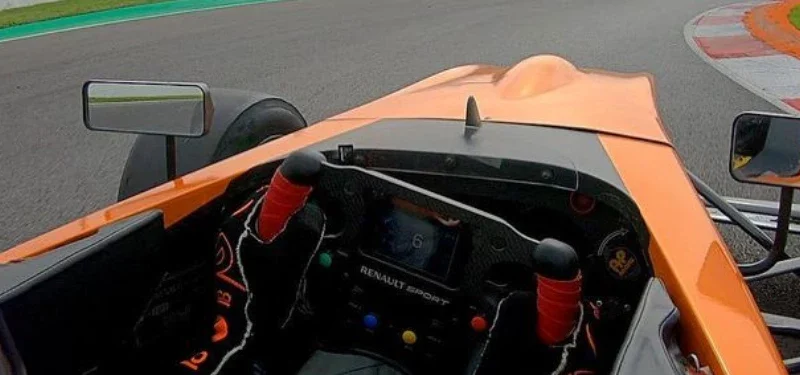
From Sim Racing to Real Racing: Ukrainian Champion Artem Khorolsky Tests Formula Renault Car in France
In a remarkable transition that highlights the growing bridge between virtual and real motorsport, Ukrainian sim racing champion Artem Khorolsky has completed his first test in an actual racing car. The talented driver, who earned his reputation through digital competitions, recently traveled to France to experience the thrill of piloting a genuine Formula Renault single-seater with the Vermin Formula Experience team. This milestone represents not just a personal achievement for Khorolsky, but also demonstrates the increasingly legitimate pathway that sim racing provides for aspiring professional drivers.
First Impressions from the Track
The Vermin Formula Experience team, known for offering talented sim racers the opportunity to transition into real-world motorsport, recently released video footage capturing Khorolsky’s genuine reactions during and after his time on track. The Ukrainian champion shared his impressions about the car’s performance, the characteristics of the circuit, and how his extensive sim racing experience translated to actual driving. His feedback revealed both the similarities and stark differences between virtual and physical racing, providing valuable insights for other sim racers aspiring to make similar transitions.
The Rise of Sim Racing as a Professional Pathway
Sim racing has evolved dramatically over the past decade, transforming from a niche hobby into a legitimate training ground for professional motorsport. Modern racing simulators offer incredibly accurate physics models, realistic force feedback systems, and meticulously recreated circuits that allow drivers to develop genuine racing skills without the enormous costs associated with traditional karting pathways. Major Formula 1 teams now actively scout talent from sim racing competitions, with drivers like Max Verstappen and Lando Norris being well-known advocates who continue to compete virtually even at the highest levels of real-world racing.
Success Stories from Virtual to Reality
The route Khorolsky is taking has been pioneered by several remarkable predecessors. The most well-known case is perhaps Jann Mardenborough, who claimed victory in the GT Academy competition in 2011 and subsequently competed in the 24 Hours of Le Mans and multiple professional racing categories. More recently, drivers identified through platforms such as iRacing and Gran Turismo have obtained real-world racing contracts, demonstrating that virtual speed can genuinely translate to actual performance. The essential skills that carry over include racecraft, track memorization, understanding of racing lines, and the mental discipline necessary for high-pressure competition.
Ukraine’s Growing Sim Racing Community
Ukraine has developed a surprisingly robust sim racing community despite the challenges the country has faced in recent years. The dedication of drivers like Khorolsky demonstrates the passion for motorsport that exists within the nation, even when access to traditional racing infrastructure remains limited. Sim racing has provided Ukrainian talents with a means to compete internationally and showcase their abilities on a global stage, bypassing many of the financial and logistical barriers that would otherwise prevent their participation in motorsport.
The Challenge of Real-World Racing
The Formula Renault car that Khorolsky tested represents a significant rung on the single-seater racing ladder. These machines generate approximately 200 horsepower and incorporate advanced aerodynamic packages that produce substantial downforce, creating a driving experience markedly different from road cars or even high-powered karts. The physical demands are substantial, with drivers experiencing g-forces that test neck and core muscles in ways no simulator can completely replicate. Furthermore, elements like tire degradation, evolving track conditions, and the real consequences of errors introduce psychological pressure that virtual racing cannot fully simulate.
What’s Next for Khorolsky
Looking forward, Khorolsky’s test session could signal the start of a promising real-world racing career. The Vermin Formula Experience team has assisted many sim racers in making successful transitions to actual competition, and their evaluation of the Ukrainian champion will be vital in shaping his next steps. As sim racing technology keeps advancing and the esports-to-motorsport pathway becomes more firmly established, stories similar to Khorolsky’s will probably become more frequent, motivating a new generation of racers who start their journey not in karts, but in front of screens and steering wheels linked to sophisticated simulation software.