
‘Everything Was Broken’: Assassin’s Creed Hexe Director Slams ChatGPT for Producing Terrible Code
In a recent interview with Edge magazine, Clint Hocking, the renowned game director behind Far Cry 2 and the upcoming Assassin’s Creed Hexe, delivered a scathing critique of artificial intelligence tools being used in game development, particularly when it comes to programming. Hocking’s comments add fuel to an ongoing industry debate about the role of AI in creative and technical processes, with the veteran developer warning that relying on tools like ChatGPT for coding can lead to disastrous results.
Hocking’s Failed Experiments with AI-Generated Code
Hocking, who brings more than two decades of gaming industry experience, characterized his trials with AI-generated code as profoundly disappointing. The director explained that when he tried using ChatGPT to help with programming tasks, the outcomes were disastrous. ‘Everything was broken,’ Hocking reportedly said, stressing that the AI-produced code was full of errors, inefficiencies, and basic misinterpretations of what was actually required. The director’s frustration underscores a mounting worry among seasoned developers that AI tools, though impressive in certain applications, remain far from capable of replacing human expertise in complex software development.
This criticism arrives at an especially pertinent moment as the gaming industry increasingly investigates AI integration throughout different facets of development. Major publishers and studios have been testing artificial intelligence for tasks ranging from generating NPC dialogue to producing procedural content and supporting quality assurance testing. Yet Hocking’s experience indicates that for the complex, logic-dependent nature of game programming, existing AI models fall considerably short. Game code demands not merely syntactical accuracy but a thorough grasp of game engines, memory management, performance optimization, and the innumerable interdependencies that enable modern games to operate.
The Weight of Experience Behind the Criticism
Clint Hocking’s perspective carries considerable weight in the industry. His work on Far Cry 2, released in 2008, is still celebrated for its innovative open-world design, dynamic fire propagation system, and emergent gameplay mechanics. The game pushed technical boundaries and required sophisticated programming solutions that balanced player freedom with system stability. Hocking’s experience on that project and others gives him unique insight into what quality game code actually requires – nuanced understanding that he argues AI simply cannot provide in its current state.
The Broader Industry Debate Over AI Integration
The debate over AI in game development has intensified throughout 2024 and into 2025, with workers and industry unions expressing concerns about job displacement while executives tout potential cost savings and efficiency gains. Large language models like ChatGPT, developed by OpenAI, have demonstrated impressive capabilities in generating human-like text and even producing functional code snippets for simple tasks. However, professional developers have consistently noted that AI-generated code often requires extensive debugging, can introduce security vulnerabilities, and frequently fails to account for edge cases that experienced programmers anticipate naturally. The technology excels at pattern recognition and can produce code that looks correct on the surface, but it lacks the contextual understanding necessary for complex systems.
What Assassin’s Creed Hexe Demands
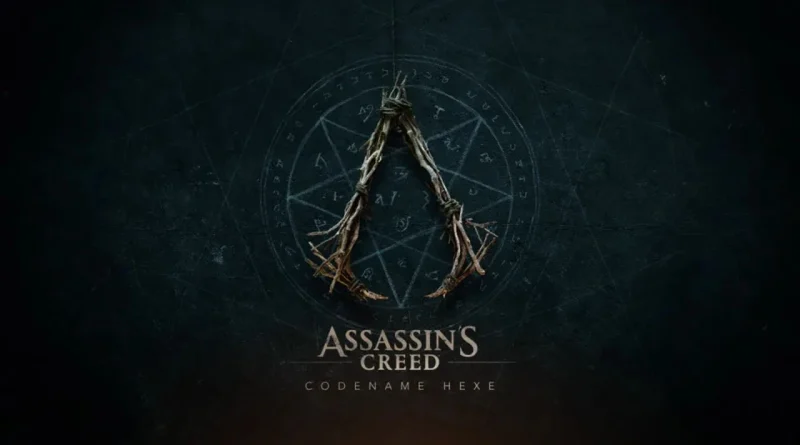
Assassin’s Creed Hexe, the project Hocking is currently directing, represents one of Ubisoft’s most ambitious undertakings. Set during the witch trials era, the game promises to take the long-running franchise in a darker, more atmospheric direction. Development of such a complex title requires thousands of lines of meticulously crafted code, sophisticated AI systems for NPCs, detailed physics simulations, and seamless integration between countless game systems. Hocking’s comments suggest that attempting to shortcut this process with AI-generated code would be not only ineffective but potentially harmful to the final product’s quality.
Industry analysts note that Hocking’s critique reflects a broader pattern of experienced professionals pushing back against AI hype. While artificial intelligence undoubtedly has applications in game development – from procedural generation to automated testing – the notion that it can replace skilled programmers appears increasingly unrealistic. The gaming industry’s most celebrated titles are distinguished by their technical excellence and innovative solutions to complex problems, achievements that require human creativity, experience, and the kind of deep understanding that current AI models simply cannot replicate. As development on Assassin’s Creed Hexe continues, Hocking’s team will likely rely on traditional programming expertise to bring their vision to life.