
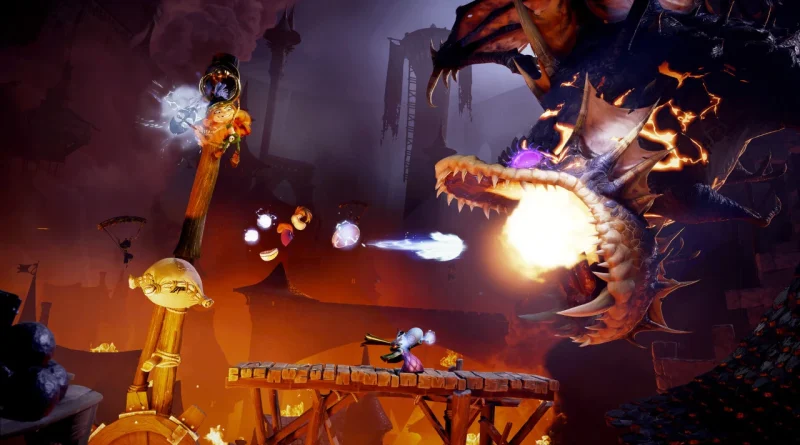
Original Stays Intact: Ubisoft Confirms Classic Rayman Legends Will Remain Available Alongside New Remake
In a move that has reassured longtime fans of the beloved platforming franchise, Ubisoft has officially confirmed that the original Rayman Legends will not be removed from digital storefronts following the announcement of Rayman Legends Retold. This commitment comes after initial skepticism from the gaming community, who have grown increasingly wary of publishers delisting classic titles when releasing updated versions. The French gaming giant’s decision marks a departure from controversial industry practices that have frustrated players in recent years.
The announcement of Rayman Legends Retold initially drew mixed reactions from the fanbase when it was first revealed. Many players expressed concerns that another beloved classic would fall victim to the growing trend of games being removed from digital platforms, a practice that has become all too common in the modern gaming landscape. However, after Ubisoft showcased the remake’s substantial improvements and revealed a consumer-friendly pricing structure, public sentiment shifted dramatically from criticism to cautious optimism.
What particularly sweetened the deal for fans was the inclusion of a remastered version of Rayman Origins bundled with the Legends remake. Rayman Origins, released in 2011, marked the triumphant return of the limbless hero after years of spin-offs and Rabbids-focused titles. The game was celebrated for its hand-drawn art style, fluid gameplay mechanics, and challenging level design. Its sequel, Rayman Legends, built upon these foundations when it launched in 2013, introducing new features like musical levels and the beloved character Barbara, quickly becoming one of the most critically acclaimed platformers of its generation.
The Rayman franchise holds a special place in gaming history, dating back to the original title’s release in 1995 for the PlayStation, Atari Jaguar, and MS-DOS. Created by Michel Ancel, who would later go on to design Beyond Good and Evil, Rayman distinguished itself through its imaginative world design and punishing difficulty. The series has sold millions of copies worldwide and remains one of Ubisoft’s most recognizable intellectual properties, though it has been largely dormant in recent years as the company focused on live-service games and established franchises like Assassin’s Creed and Far Cry.
The preservation of classic games has become an increasingly contentious topic within the gaming industry. Unlike films or books, video games face unique preservation challenges due to their dependence on specific hardware, software ecosystems, and online infrastructure. When publishers delist games from digital storefronts, players who never purchased them lose the ability to legally acquire these titles, effectively erasing them from mainstream accessibility. High-profile cases of game delistings have sparked debates about digital ownership rights and the cultural importance of preserving interactive entertainment as an art form.
Industry analysts have noted that Ubisoft’s decision to maintain the original alongside the remake represents sound business strategy as well as goodwill toward consumers. Players who prefer the original’s art direction or those who already own the classic version will not feel pressured into purchasing the new release. Meanwhile, newcomers to the franchise can choose between the faithful recreation or the original experience, depending on their preferences and budget. This approach stands in contrast to some recent industry practices where remakes have effectively replaced their predecessors entirely.
The Rayman Legends Retold project signals that Ubisoft may be recommitting to its classic franchises after years of focusing primarily on open-world experiences and games-as-a-service models. For fans who have long awaited a proper new entry in the Rayman series, this remake represents both a celebration of the franchise’s legacy and potentially a testing ground for future installments. With the combination of an attractively priced bundle, promised gameplay enhancements, and the assurance that the original will remain available, Ubisoft appears to have found a formula that satisfies both business objectives and fan expectations in an industry where that balance is increasingly difficult to achieve.